
Our comprehensive kidney care services
Swasth Kidney Clinic provides expert nephrology and kidney transplant care. Our services range from early kidney disease management to advanced dialysis and transplantation.
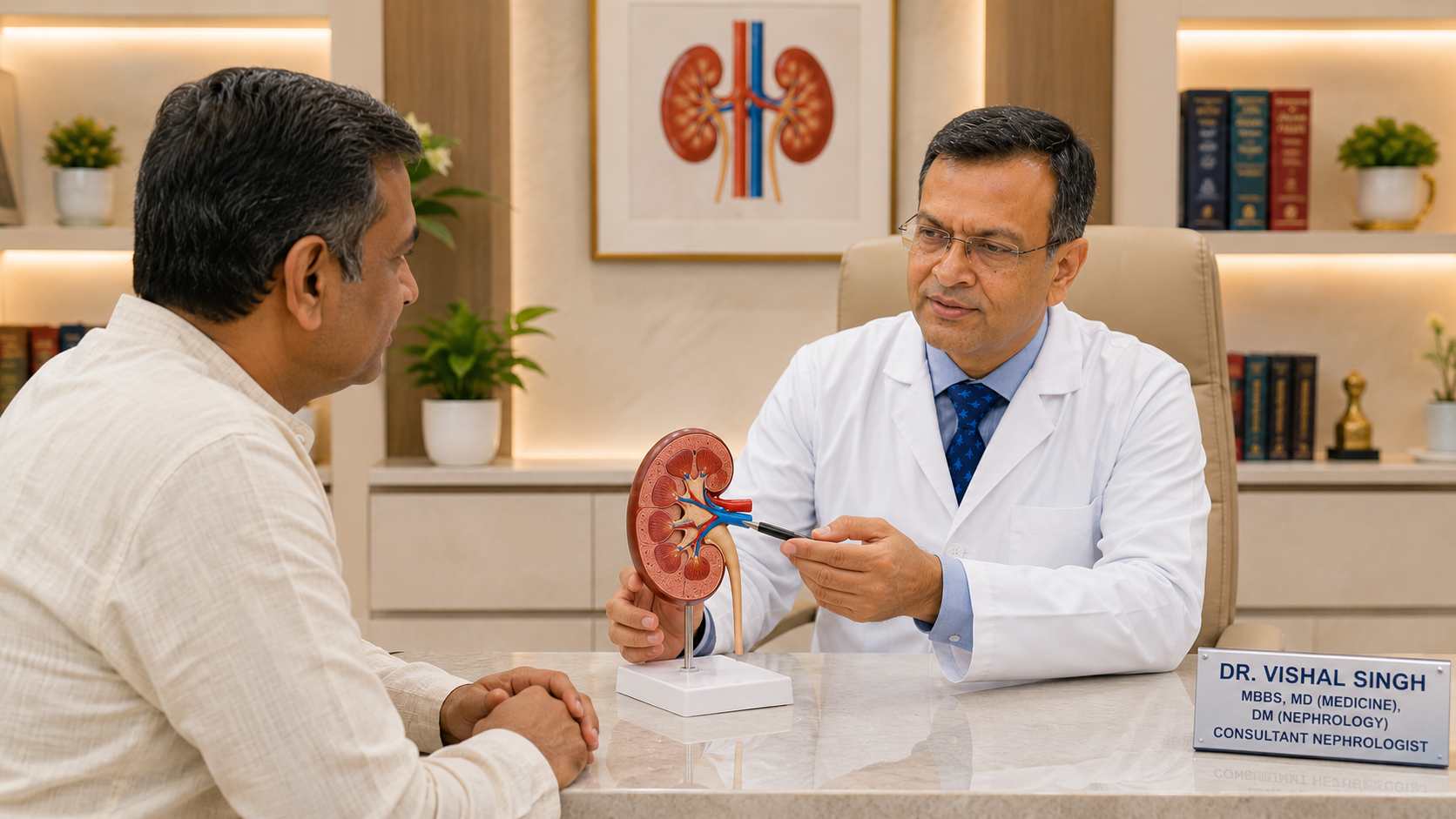
10,000+ patients treated with expert kidney care.







Our nephrology solutions
Committed to quality kidney care, compassion, and long-term wellness for every patient.


Patients who trust our care
Hear from our patients about their journey to better kidney health and why they choose Swasth Kidney Clinic.
"Dr. Vishal gave me a second chance at life."
After my kidney transplant at Swasth Kidney Clinic, I feel like a completely new person. The care and attention from Dr. Vishal and his team at every step was exceptional.
"My kidney disease is finally under control."
I was diagnosed with chronic kidney disease and didn't know what to do. Dr. Vishal explained everything clearly and put together a care plan that has stabilised my condition remarkably.
"Home dialysis changed everything for me."
Switching to peritoneal dialysis at home was the best decision I made. The team at Swasth Kidney Clinic trained me and supported me every step of the way. I now have so much more freedom.


Your kidney health questions, answered
What are the early signs of kidney disease?

Kidney disease is often silent in early stages. Warning signs include foamy urine, blood in urine, swelling in ankles or feet, fatigue, increased thirst, and frequent urination at night. If you have diabetes or hypertension, get your kidneys tested regularly even without symptoms.
How do I know if I need dialysis?
Dialysis is typically recommended when your eGFR falls below 10–15 ml/min/1.73 m² or when you develop symptoms of kidney failure such as severe fluid overload, uncontrolled high potassium, or uraemic symptoms. Your nephrologist will advise the right time and modality — haemodialysis, hemodiafiltration, or peritoneal dialysis.
Can diabetic kidney disease be treated?
Yes. While diabetic kidney disease cannot always be reversed, its progression can be significantly slowed with tight blood sugar and blood pressure control, SGLT2 inhibitors, ACE inhibitors or ARBs, and lifestyle modifications. Early detection through annual urine and blood tests is key.
Who is eligible for a kidney transplant?
Most patients with end-stage kidney disease are potential transplant candidates. A thorough evaluation assesses your overall health, cardiovascular status, and donor compatibility. We perform blood group incompatible transplants, sensitised host transplants, paediatric transplants, and deceased donor transplants — offering options for a wide range of patients.
How do hypertension and kidney disease affect each other?
The relationship is bidirectional — high blood pressure damages the kidneys, and kidney disease raises blood pressure. Tight blood pressure control (targeting below 130/80 mmHg) is one of the most important steps to protect kidneys. Specialist nephrology input is often needed for resistant hypertension linked to kidney disease.
Schedule your kidney consultation with ease!
Schedule your appointment today and take the first step toward better kidney health with expert nephrology and transplant care from Dr. Vishal Singh.
Swasth Kidney Clinic is dedicated to delivering expert, compassionate, and advanced nephrology care to help every patient achieve the best possible kidney health.


